Children’s pants, coordinated sets and the practical demands of repeat production feature in our manufacturing background.
These anonymized cases are based on management-reported history. The orders were placed through trading companies, rather than directly by end retailers or brand owners. Approximate historical figures await documentary confirmation and are not current capacity, minimum-quantity or lead-time commitments.
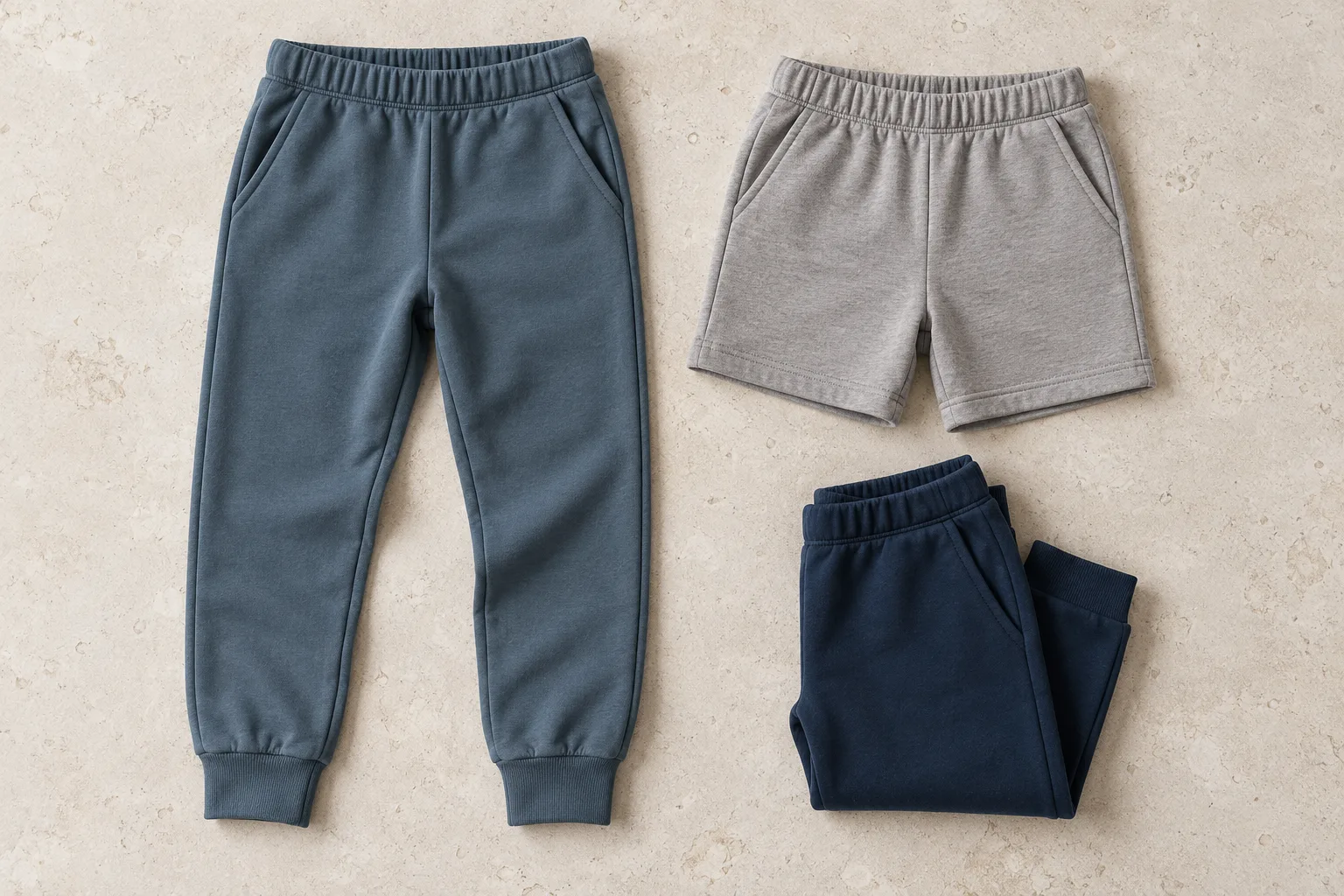
AI category illustration · Not a photograph of the historical orders.
Historical case · Children’s pants
Repeat production for European retail supply chains.
The factory team described recurring children’s pants production through a Henan-based trading company. Pants were the main product, with supporting T-shirt work in the wider relationship.
Reported order scale
Approximately 20,000–30,000 pieces per order in one historical retail supply chain.
Historical samples were reported as retained by the factory.
What this history shows
A sustained focus on children’s pants.
Repeated pants orders support the product focus we present today. Our current production focus increasingly centers on knits, especially children’s pants and T-shirts.
Source note: factory interviews record historical samples at the factory and order documents held by the trading company. The numerical scale and repeat history have not been independently audited.
Details to discuss for a new pants order
Pattern and sample review from your design
Waist, rise, pocket and leg-opening requirements
Fabric and trim preparation for the agreed style
Production, inspection and packing requirements
These are proposed discussion points for a new order, not a reconstruction of undocumented historical operating details.
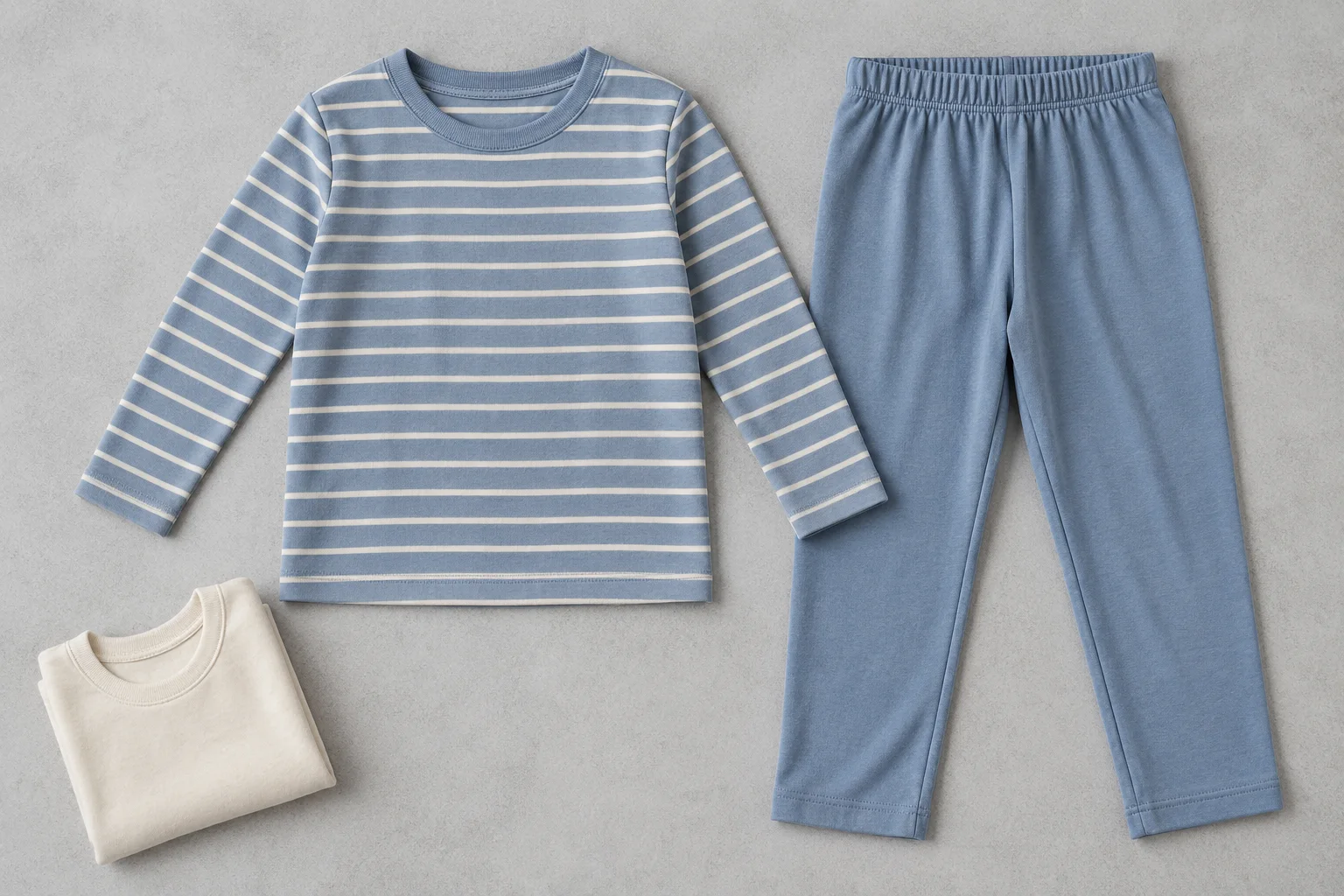
AI category illustration · Not the historical design or order.
Historical case · Pajama sets
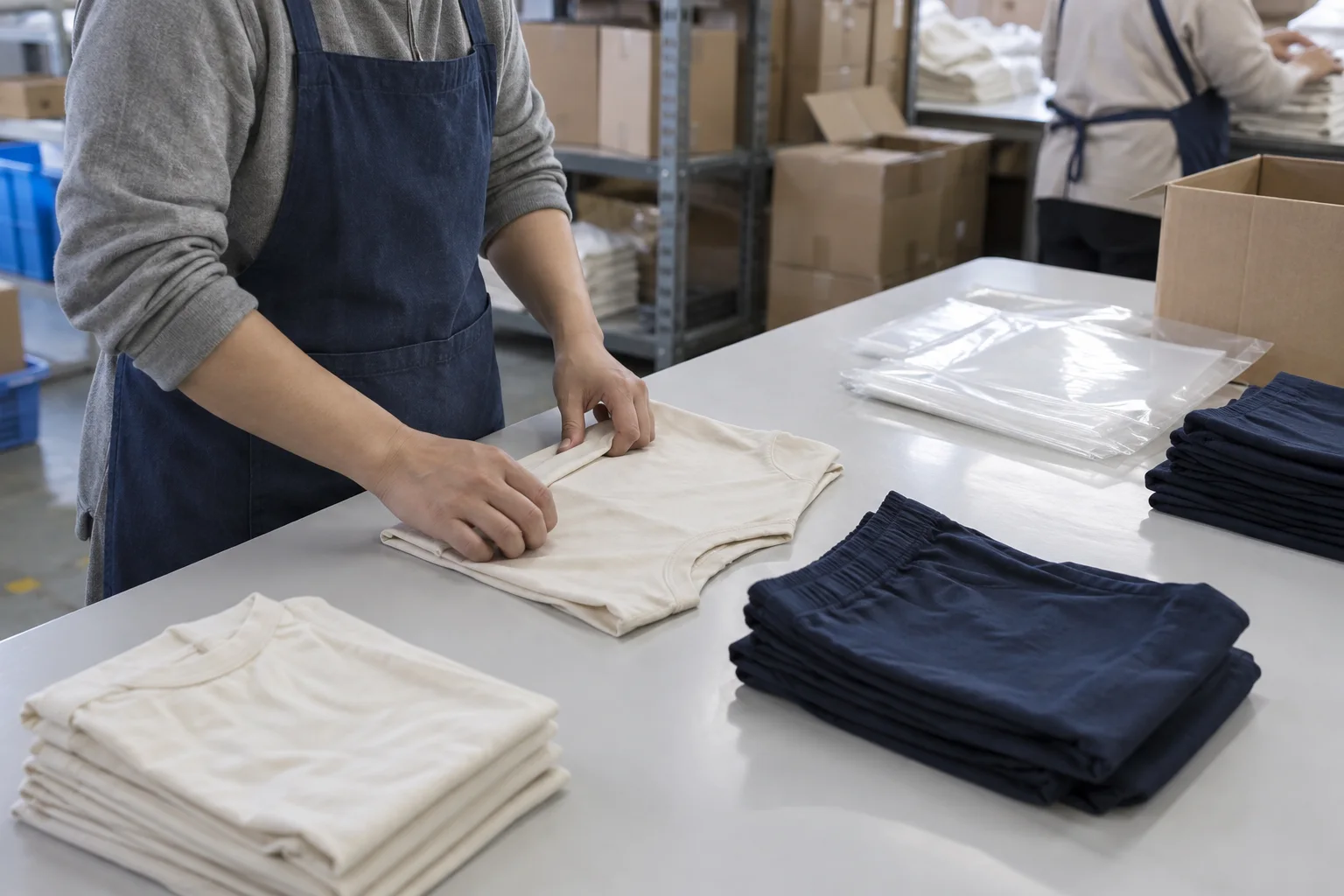
Coordinated garments. More involved packing.
Management described a licensed pajama-set order through a trading company, with folding and packing identified as a more involved part of the work. Repeat production followed the initial order.
Reported order scale
Approximately 100,000–200,000 sets for a historical order.
Reported production period
More than two months for that order.
Reported continuation
Repeat production after the initial order.
Practical production detail
The order includes the way it is packed.
Set preparation, folding and presentation were highlighted in the factory’s account. This experience makes packing requirements an important part of a discussion about a new garment order.
Source note: the licensed history is reported by management. Brand names, licensed artwork and customer identities are omitted. The illustrated garments do not recreate that design, and the case does not establish an ongoing licensing or direct-customer relationship.
AI process illustration · Not the historical packing operation.
Illustrative enquiry examples
Details to discuss before sampling.
These examples show the details a buyer could provide before sampling. They are illustrative scenarios, not completed customer orders or customer endorsements.
Illustrative enquiry
A knit-pants assortment
A buyer brings a reference pant and a proposed color and size assortment.
Buyer information
Size chart, fabric requirements, color references and quantity breakdown.
Details to agree
Waistband, pockets, hem, labels and packing assortment.
Next step
Review sample requirements and feasibility before agreeing terms.